Thursday, January 26, 2023

Opponents of Philly FDR Park Development Speak Out
Philadelphia, PA – The FDR Park in South Philly is in the midst of a new redevelopment plan supported by the city and private groups like Fairmount Park Conservancy. Opponents of the plan have dubbed their cause “Save the Meadows,” referencing a wild area that was partly bulldozed late in 2022. The plan’s authors are finally hosting a community event on January 26, 2023, although opponents believe that they will not be allowed to speak inside.
A demonstration outside the Grand Yesha Ballroom in South Philly is highlighting reasons they oppose the plan. An ad-hoc coalition of several groups, under the flag “The People’s Plan for FDR Park,” has pushed local officials to reconsider the plan and preserve more meadows while unlocking often-shuttered sports fields around the city.
Among the main concerns opponents have is that the expansion of the Philadelphia International Airport will remove wetlands near the town of Eastwick, which can thus expect more flooding as climate change intensifies. (The airport’s expansion is a key part of the financing of the FDR Park project.)
Live coverage below:
See our video report from last fall below:
Opposition to the development plan was also an element in a large demonstration and march in November 2022 that highlighted several different, yet related causes in the city.
Please consider a tax-deductible donation to help sustain our horizontally-organized, non-profit media organization:

The post Opponents of Philly FDR Park Development Speak Out appeared first on UNICORN RIOT.
by Unicorn Riot via UNICORN RIOT
Tuesday, January 24, 2023
Samatar Encampment Eviction Leaves 100 Displaced Mid-Winter
Minneapolis, MN – The largest encampment of unhoused people in Minneapolis was evicted on Wednesday, Jan. 18, following a recent shooting which left 27-year-old Adnan Mohamed Ali dead. The Samatar Encampment in the Cedar-Riverside neighborhood (also playfully known as ‘House of Balls Encampment,’ named after a business located across the street) had represented a sense of stability for about 100 residents, many of whom have very few resources.
Residents were given a “24 Hour” notice on Tuesday afternoon, Jan. 17, that they must be vacated by 9 a.m. the following morning. Many people were told verbally by Hennepin County outreach workers that they would transport tents, furniture, and other belongings to an offsite storage facility, but no such help ever came. Instead, residents were offered 20 Gallon ziplock bags by members of the State Department of Transportation (MnDOT), whose jurisdiction the land is under.
Adding to the confusion, residents weren’t given a clear answer, when asking where they could go as an alternative. Many were quick to point out that shelter beds are notoriously unavailable, and when they do open up, many times it’s just a mat on the floor which you have to be in no later than 9 p.m., and leave by as early as 6 a.m. This can lead to issues for the many residents who have regular employment, and couples who get separated once inside shelters – oftentimes without phones to locate one another.
During the eviction, the scene became hostile as community encampment defenders faced off with contractors who were tasked with clearing out the camp.
One person was forcibly arrested by multiple Minnesota State Patrol troopers while demanding they cancel the scheduled displacement. The person arrested, who wished to remain anonymous, told Unicorn Riot in a written statement that they were shocked and horrified to see what they felt was “inhumane” treatment by the authorities who left unhoused people “huddled under a bridge with no shelter, hungry, and cold.”
“I found the sheer quantity of people who needed those tents (I would guess over a hundred) and the intensive amount of State Patrol (I would guess at least 50) totally shocking and absolutely making a very bad problem worse. To hear about those same people huddled under a bridge with no shelter, hungry, and cold… is shocking … Horrifyingly inhumane and I’ll forget seeing this.”
During the eviction, housing activist, DJ, recorded workers from Big Top Contracting threatening to “beat [them] like a slave.”
Big Top Contracting, Inc. is owned by Alfonzo Williams, the CFO of the Agape Movement, a group centered around George Floyd Square who became known for helping the city to move barricades at the Square on June 3, 2021. Agape has been partnered with the city and paid by the Minneapolis Office of Violence Prevention for community “engagement.” Some local activists have called them a counter-insurgency force or collaborators, while others have welcomed them.
Meanwhile, Big Top continues to play ‘clean-up crew’ for MnDOT. During an attempted eviction of an encampment off I-35W last summer, Williams was recorded initiating an aggressive sequence of events by ordering his crew of workers to start uprooting tents, some of which were housing people at the time.
Aside from threatening community members during last week’s eviction, the young group of ten Big Top contractors were tasked with destroying tents and collecting biohazardous materials at times.
Other contractors wearing jackets marked with “Lookout Flagging” also performed tasks onsite. A 2022 Minneapolis Public Housing Authority project manual (PDF) lists a “Pride Cleanup LLC” doing business as “Lookout Flagging Services” led by John Pride, and a website for Pride Cleanup lists Lookout Flagging as a sister company. MnDOT’s “Traffic Control Supervisor certified list” and a Minneapolis “Memorandum to Bidders and Proposers” (PDF) reference the companies.
The eviction fell one day before yet another major storm swept through the Twin Cities, marking a pattern of displacements during major weather events. Many of the residents have expressed that encampments bring a sense of community and safety in numbers. As opposed to trying to survive individually, they pool resources and many camps have their own rules to minimize disturbances, as a show of good faith as neighbors. Now forced into the street with none of their belongings, people reported having nowhere to go.
This eviction comes just 19 days after the eviction of the longstanding Quarry encampment.
Niko Georgiades contributed to this report for Unicorn Riot.
About the author: Aaron Johnson is a street journalist and filmmaker currently filming ‘They Sleep Among Us’ – a documentary about Minneapolis unhoused encampments. Follow on Instagram: theysleepamongus.
Unicorn Riot's 2020-22 Unhoused Crisis in Minneapolis:
- Dozens of Police Evict Quarry Encampment - January 2, 2023
- Quarry Encampment Faces Eviction in Minneapolis - December 28, 2022
- Three Encampments and Halfway House Evicted, Displacing Hundreds - October 12, 2022
- Personal Belongings Trashed as Minneapolis Encampment Evicted - July 22, 2022
- Minneapolis Community Resists Encampment Eviction - July 20, 2022
- Southside Minneapolis Encampment Faces Eviction Threat - June 28, 2022
- Eviction Defense Successful Despite Aggressive Contractors - June 9, 2022
- Uptown Streets Blocked During Protest Against Police Attack on Houseless - March 23, 2021
- Five Arrested as Minneapolis Police Attempt Raid on Near North Houseless Encampment - March 23, 2021
- Homeless Tenants Union: Unhoused Self-Advocacy in the Twin Cities - February 17, 2021
- Winter of Coronavirus: Seeking Shelter in Minneapolis During COVID–19 - December 14, 2020
- Unhoused Community Forms Tenants Union, Constituents Protest at Commissioner’s Home - November 11, 2020
- Minneapolis Prioritizing Park Sweeps Over Sheltering the Unhoused - October 29, 2020
- ‘No KKKops, No Pipelines’ Banner Dropped in Minneapolis - October 6, 2020
- Reclaimed Space Sprouts From Uprising’s Embers - September 28, 2020
- Peavey Park Sanctuary Homeless Camp Evicted in Minneapolis - September 24, 2020
- New Month Brings Added Urgency To Minneapolis’ Housing Needs - September 2, 2020
- Sanctuary Camp Residents Pressured To Move, No Housing Solution In Sight - August 22, 2020
- Minneapolis Police Sweep West Powderhorn Encampment, Pepper Spray Defenders - August 15, 2020
- Authorities Visit Loring Park Tent Encampment, Bring Eviction Scare - August 10, 2020
- Minneapolis’ Unhoused Speak Out Against Years of Evictions - August 3, 2020
- Minneapolis Park Police Displace Sanctuary Encampment - July 22, 2020
Follow us on Twitter, Facebook, YouTube, Vimeo, Instagram, Mastodon and Patreon.
Please consider a tax-deductible donation to help sustain our horizontally-organized, non-profit media organization:
The post Samatar Encampment Eviction Leaves 100 Displaced Mid-Winter appeared first on UNICORN RIOT.
by Unicorn Riot via UNICORN RIOT
Monday, January 23, 2023
Ancient Antiquities Discovered in Palestine’s Gaza Strip
Gaza Strip, Palestine – Two major discoveries in 2022 showcase thousands of years of Arab existence on Palestinian lands.
A 4,500-year-old statue of the Canaanite goddess Anat and a 1,500-year-old tiled mosaic floor were both separately found last year in the Gaza Strip, a coastal area of 140 square miles sandwiched between Israel and Egypt off the coast of the Mediterranean Sea and teeming with tales of history.
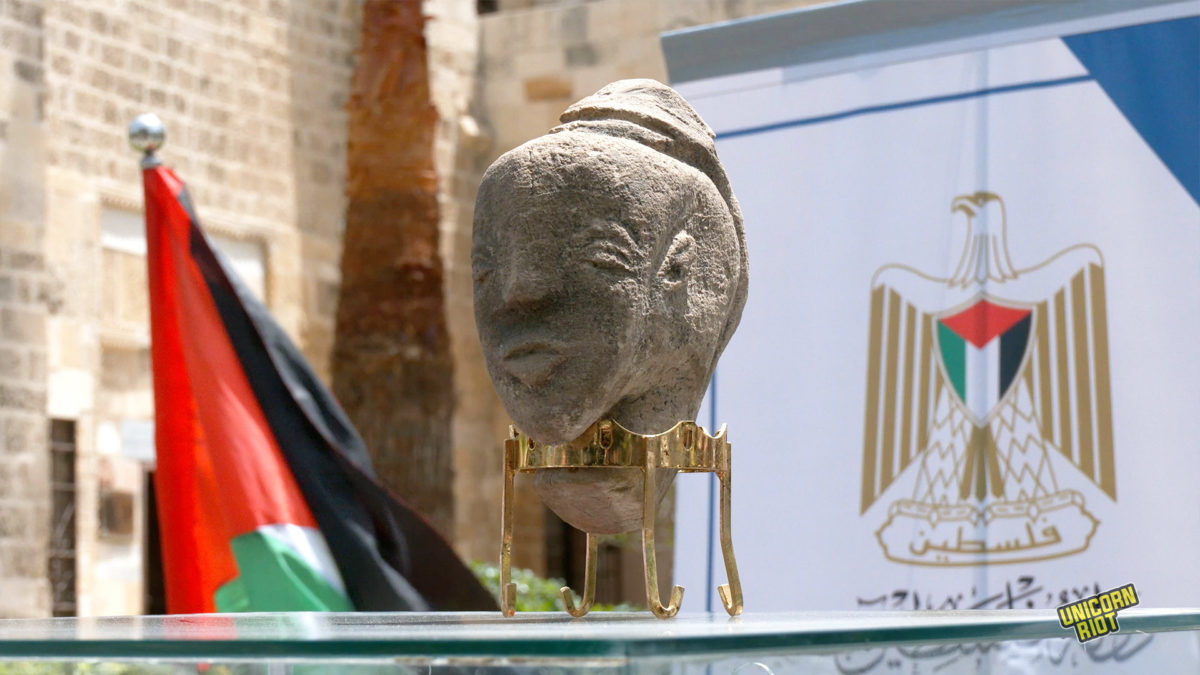
4,500-Year-Old Canaanite Statue of the Goddess of Love
While cultivating his land, a farmer unearthed an ancient Canaanite statue of what experts say depicts the Goddess Anat. Found in the city of Khan Yunis, in the southern Gaza Strip, the statue with only a head, stands a bit over eight inches tall (21cm) and is made of limestone.
A serpent is attached to the crown of the head of the statue to represent strength and invincibility. According to Canaanite mythology and belief, Anat was the goddess of love, beauty and war.
Researcher and historian Walid Al-Akkad, owner of the Al-Akkad Museum in Khan Yunis, said that the snake on the head of the statue indicated “strength and love and is evidence of the strength of the Canaanite civilization in that era.”
The Director General of Antiquities and Cultural Heritage in Gaza, Jamal Abu Rida, said the statue is 4,500-years-old and dates back to the Canaanite period of 2,500 BCE.
The discovery occurred in the Sheikh Hamouda area of Khan Yunis, an archaeological site in the east of Khan Yunis that was the ancient commercial land route for successive civilizations in Palestine.
Al-Akkad added that the area in which the statue was found is considered a high mound, inhabited by many civilizations. In the same area Akkad had previously found a coffin made of soft lead weighing 231 pounds (105 kilograms) and containing coins dating back to the Byzantine period.
“No other statue resembles this one in Gaza City,” said Nariman Khaleh the Director of Qasr al-Basha, the Pasha’s Palace Museum in Gaza City, where the ancient statue is now on display.

1,500-Year-Old Complex Floor Mosaic
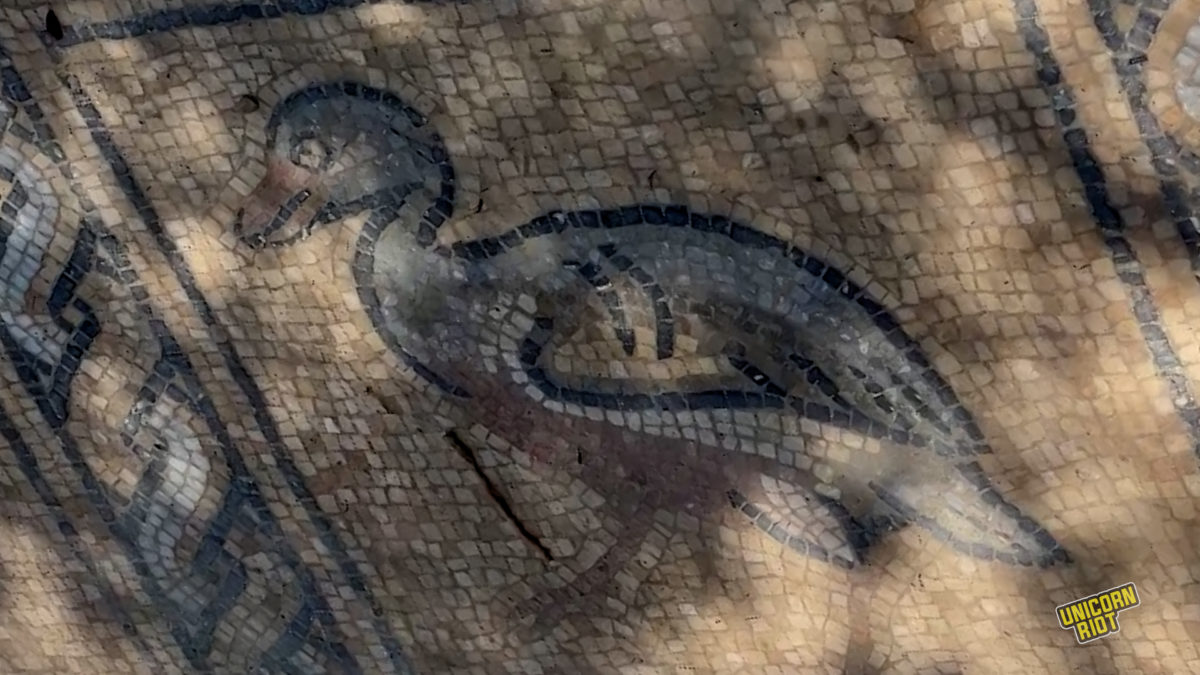
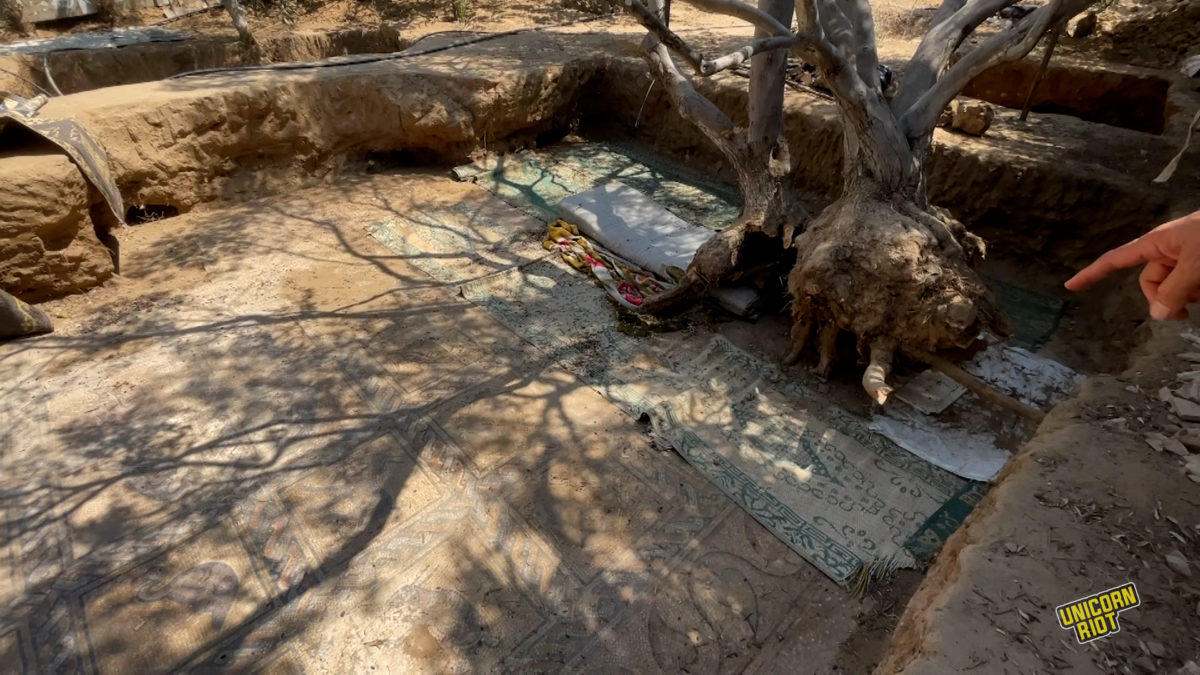
Also in 2022, just a half a mile from the Israeli border in the Gaza Strip, another Palestinian farmer made an amazing discovery. In his backyard, he found a well-preserved and vividly colored mosaic floor likely from the period between the fifth and seventh centuries.
The well-preserved pavement includes 17 iconic images of beasts and birds.
“These are the most beautiful mosaic floors ever discovered in Gaza, both in terms of the quality of the graphic representation and the complexity of the geometry,” said Rene Elter, an archaeologist from the French School of the Bible and Archeology in Jerusalem.
Elter said proper excavations should be carried out to determine exactly when it was built and whether it was part of a religious or secular complex.
The British Encyclopedia defines “Canaan” as something that is “always cent[ered] on Palestine.” They further note that Palestine was inhabited by Canaanites of Semitic origins before the Israelis, and that the name Canaan and the Canaanites appeared in Egyptian and Phoenician cuneiform writings since about the fifteenth century BCE. The encyclopedia adds that the credit for our knowledge of the history of Canaan is due to archaeological discoveries as well as ancient blogs such as the Amarna letters.
According to the American archaeologist James Henry Breasted (pdf), the Canaanites are one of the Arab tribes that have settled in Palestine since the year 2,500 BCE. The ancient civilizations of Canaan and Phoenicia, both of Semitic Arab origin, settled in Palestine and Lebanon through a single migration that set out from the Arabian Peninsula in the third millennium BC.
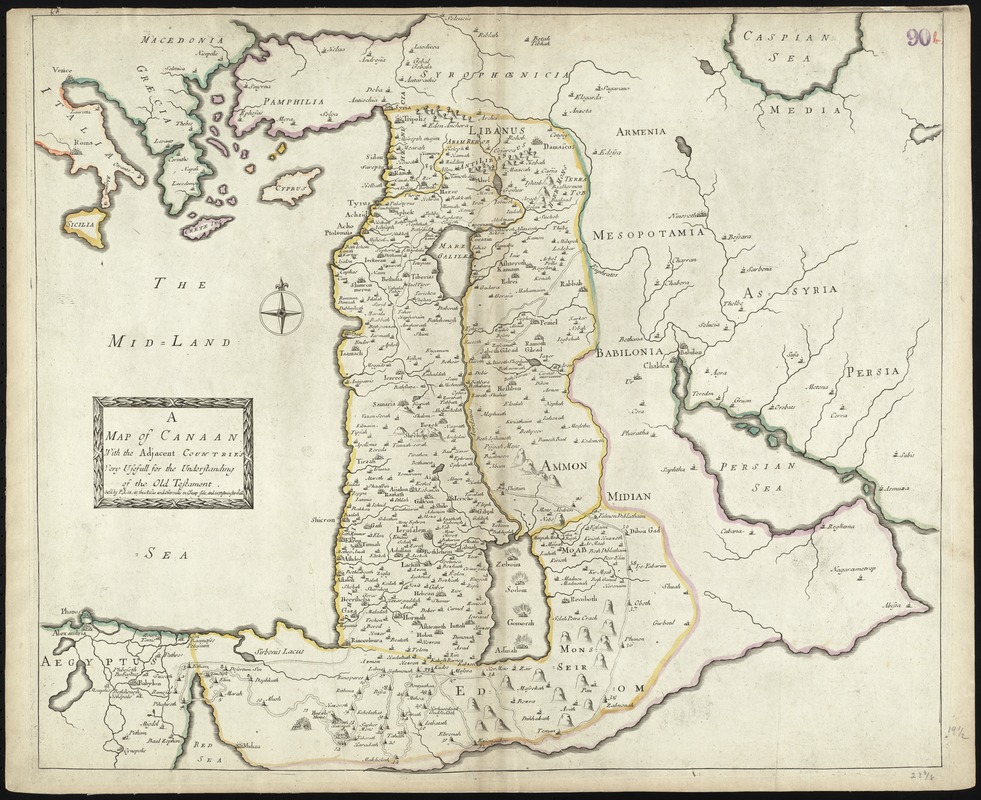
The Canaanite civilization also extended to the Syrian regions, such as Ras Shamra (Ugarit), which is one of the important Canaanite civilization centers since the first half of the second millennium BCE, as well as the Kingdom of Ebla near Aleppo.
Neither of the discoveries noted above takes away the fact that others have lived in these lands for centuries as well. Jewish people maintain their ties to this land go back 3,700 years.
The Gaza Strip was a busy trade route between Egypt and the Levant in ancient times and is full of remnants of ancient civilizations, from the Early Bronze Age to the Islamic and Ottoman eras.
Yet, despite being a land so rich in history and archaeological areas dating back centuries, treasures of ancient civilizations are rarely protected in Palestine. An ongoing Israeli siege on Gaza and repeated bombings by Israeli forces over the last decades have negatively impacted archaeological sites and the ability to excavate. Intersecting with these attacks is the lack of concern by the ruling parties in Palestine, which negatively affect antiquities and therefore tourism in the Gaza Strip.
Found by farmers, the two discoveries of 2022 have helped push the conversation on providing better protection for antiquities in Gaza.
With several groupings of fragile sites threatened by a lack of awareness and resources, as well as the continuing danger of conflict between Israel and local Palestinian militants, many are hoping humanity can prevail in saving relics of the old world.
Niko Georgiades contributed to this report for Unicorn Riot.
Unicorn Riot's Coverage from Palestine:
- Surfing Santas in Gaza Welcome a New Year of ‘Prosperity and Happiness’ - January 4, 2023
- Palestinian Lands Seized for Israeli Military and Colony Settlements - December 14, 2022
- Gaza Flooded Due to Old Infrastructure From Israeli Blockade and Bombings - November 22, 2022
- Nablus Siege Lifted After 3+ Weeks of Collective Punishment - November 10, 2022
- Attacks and Collective Punishment, a Cycle of Palestinian-Israeli Conflict - October 18, 2022
- Murals of Eyes in Silwan Remind Jerusalem of Palestinian Struggle - October 1, 2022
- Protests in Besieged Palestinian Village Nabi Samuel Suppressed - September 25, 2022
- Over 2,200 Israeli Raids Killed 140 Palestinians Thus Far in 2022 - September 13, 2022
- Sand Sculpture on Shore of Gaza Sea Tributes Children Killed by Israeli Forces - August 31, 2022
- Clowns Visit Children in Gaza Amidst Rubble of Destroyed Houses - August 12, 2022
- Operation Breaking Dawn: Israel Kills 44 Palestinians Over Three Days - August 9, 2022
- Occupation Forces Repress Palestinians Fighting Land Grabs in the Northwestern West Bank - June 29, 2022
- Israeli Raid on Nablus Kills Two Palestinians and Wounds Many - July 25, 2022
- Palestinians Speak Out During Biden’s Visit - July 21, 2022
- Israeli Forces Suppress Protests After Court Green Lights Demolitions in Masafer Yatta - June 30, 2022
- Israeli Forces Raid Jenin, Kill Three Palestinians, Wound 10 - June 18, 2022
- Israeli Forces Assault Mourners of Young Man Dead After Israeli Attack on Al-Aqsa - June 16, 2022
- Israeli Settlers Celebrate Capturing Jerusalem, Police Arrest Palestinians - June 11, 2022
- Palestinian Investigation Finds Israel Responsible for Killing Journalist Shireen Abu Akleh - June 7, 2022
- Israel Kills 4 Palestinians in 48 Hours and Blows Up a Home - June 3, 2022
- Eyewitness Recounts Moments Israeli Forces Killed Shireen Abu Akleh - May 24, 2022
- Israeli Police Attack Funeral Procession of Palestinian-American Journalist - May 21, 2022
- Demonstrations in West Bank for Palestinian Prisoner’s Day and Jenin Camp - May 17, 2022
- Israeli Army Kills Journalist Shireen Abu Akleh - May 11, 2022
- Israeli Forces Clear Al-Aqsa for Settlers’ Tours - May 6, 2022
- Palestinians Killed While Resisting Israeli Forces in Silwad Led to More Protests - May 1, 2022
- Last Friday Prayer of Ramadan at Al-Aqsa Draws 160K Despite Strict Measures by Israeli Forces - April 30, 2022
- Man Shot by Israeli Forces During Land Day Demonstration - April 27, 2022
- Musaharati Dressed as Clowns Wake Up Citizens in Gaza Strip for Meal Before Ramadan Fast - April 25, 2022
- Israeli Airstrikes Hit Gaza, Iron Dome Explodes Missiles - April 22, 2022
- Israeli Airstrikes Target Gaza - April 19, 2022
- Al-Aqsa Mosque Stormed: Israeli Police Detain 400, Injure 153 - April 15, 2022
- Israeli Raids on Jenin Refugee Camp Leave Many Dead, Dozens Shot - April 15, 2022
- Palestinian Protesters Fight Occupation on Mount Sabih, Nablus - April 15, 2022
- Interview: First Ukrainian Refugee Arrives in Gaza Strip - April 14, 2022
- Palestinians Commemorate Land Day with Demos in Negev & Gaza - April 12, 2022
- Israeli Forces Stifle Religious Freedoms During Ramadan - April 5, 2022
- Palestinians Prevented from Reaching Confiscated Lands in Qusra, Gassed by Occupation Forces - March 31, 2022
- Palestinians Protest Israeli Colony Outposts in Northern West Bank - March 22, 2022
Follow us on Twitter, Facebook, YouTube, Vimeo, Instagram, Mastodon and Patreon.
Please consider a tax-deductible donation to help sustain our horizontally-organized, non-profit media organization:
The post Ancient Antiquities Discovered in Palestine’s Gaza Strip appeared first on UNICORN RIOT.
by Unicorn Riot via UNICORN RIOT
Subscribe to:
Posts (Atom)
SUNO v6 is now a tool, not a slop generator
Generative Music Production with Suno v6 and v6-Wild: Engineering Workflows, Latent Parameter Controls, and Acoustic Architectures The com...

-
The amazing Chris DeJoseph was on good old JR's podcast, and here are some highlights, followed by the entire show if you want to list...
-
Advanced Mining Tactics and Resource Optimization in Space Age Asteroid Belt Introduction: The Macroeconomic Paradigm Shift of the Asteroi...

